
Lever Handles vs. Sensor Faucets: The Ultimate Guide for Arthritis & Limited Hand Strength

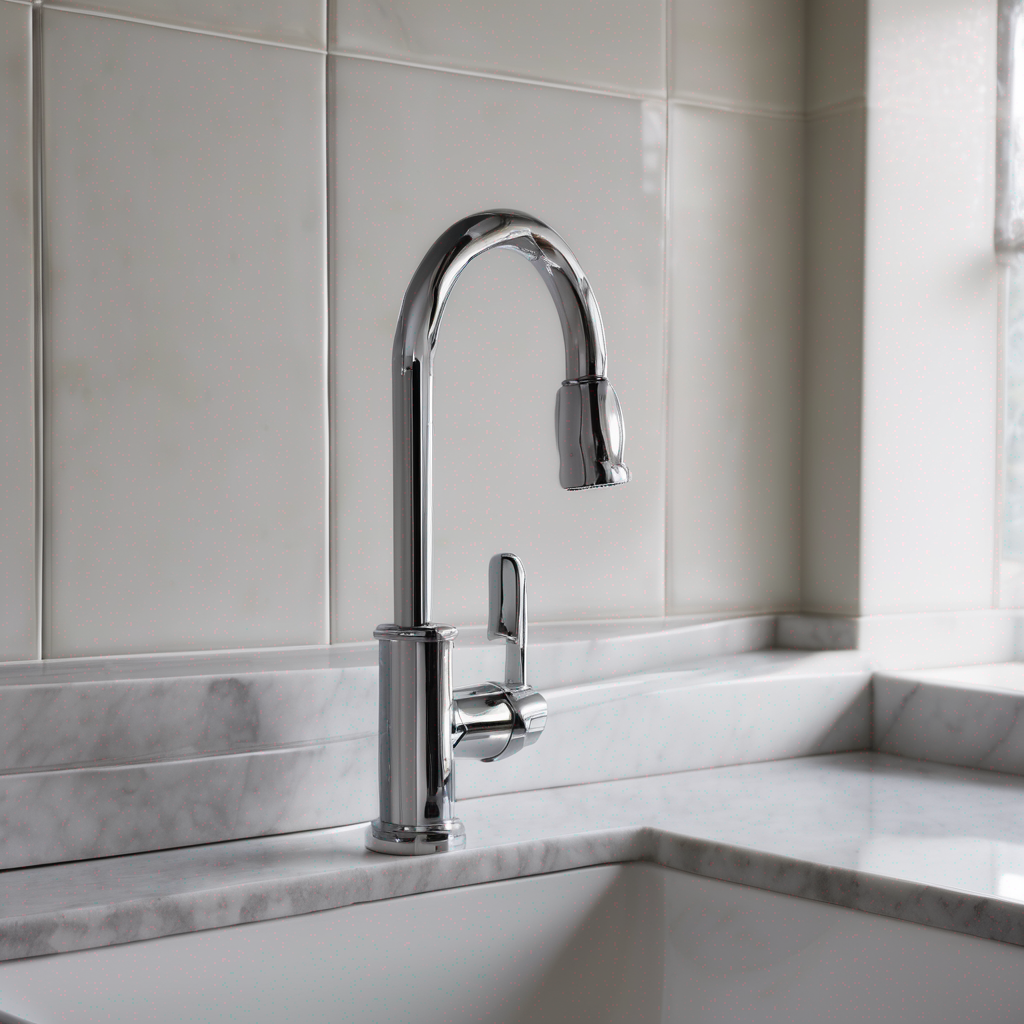
If you live with arthritis, carpal tunnel, or limited hand strength, you know that even the simplest daily tasks can become a painful challenge. Gripping a doorknob, opening a jar, or twisting a faucet handle can send a sharp reminder of the condition you manage every day. The kitchen and bathroom, spaces meant for comfort and care, can often feel like obstacle courses.
But what if one small change could remove a frequent source of pain and frustration? Choosing the right faucet isn't just a design decision; it's an investment in your daily comfort and independence. Today, we're diving deep into two of the most popular accessible faucet options: the trusty lever handle and the modern sensor faucet. Which one is truly the best for your needs? Let's find out.
Why Faucet Choice is a Game-Changer for Hand Health
Before we compare models, it's crucial to understand why this matters so much. For those with healthy, strong hands, a faucet is just a faucet. But for someone with arthritis, every interaction is a calculation of force and pain.
Traditional round or cross-shaped knobs require a tight pincer grip and a strong twisting motion (pronation and supination of the wrist). These are precisely the movements that can inflame sensitive joints in the fingers, wrist, and thumb. The goal of an accessible faucet is to minimize or completely eliminate these painful actions.
This is where standards like the Americans with Disabilities Act (ADA) provide a helpful starting point. ADA guidelines state that faucets should be operable with one hand, without tight grasping, pinching, or twisting of the wrist, and require less than five pounds of force to activate. Both lever handles and sensor faucets are designed to meet these criteria, but they do so in very different ways.
Deep Dive: The Case for Lever Handle Faucets
Lever handles have long been the go-to solution for accessible design. They are simple, intuitive, and represent a significant upgrade from traditional knobs.
What Are They?
A lever handle faucet uses a single or double elongated handle that can be pushed or pulled to control water flow and temperature. Instead of a tight grip, you can use the palm of your hand, your wrist, or even your forearm to operate it, distributing the force over a larger, less sensitive area.
Pros for Limited Hand Strength
- Effortless Operation: The primary benefit is the lack of gripping and twisting. A gentle nudge is often all that's needed to turn the water on or off.
- Precise Tactile Control: With a lever, you have direct, immediate control over both water temperature and pressure. A small adjustment gives you instant feedback, which is crucial for finding that perfect warm temperature without a painful surprise of scalding hot or icy cold water.
- Reliability and Simplicity: Lever faucets are purely mechanical. There are no batteries to change, no sensors to clean, and no electronics to fail. They are a time-tested, durable technology that is easy for any plumber to install and repair.
- Cost-Effective: Generally, high-quality lever handle faucets are significantly more affordable than their electronic counterparts, both in initial purchase price and long-term maintenance.
Cons to Consider
- Requires Physical Contact: You still have to touch the faucet. If your hands are messy from cooking or gardening, the handle will get dirty. More importantly, it still requires some physical force, which on a particularly bad day, might still be uncomfortable.
- Fine Motor Skills for Temperature: While easier than a knob, finding the exact right temperature with a single lever can sometimes require small, precise movements that can be tricky for those with severe dexterity issues.
Deep Dive: The Rise of Sensor (Touchless) Faucets
Once a luxury found only in public restrooms and airports, sensor-activated faucets are now a common and increasingly affordable option for home use. For those with severe hand pain, they represent the ultimate in accessibility.
How Do They Work?
Sensor faucets use a small infrared (IR) sensor that detects motion. When you place your hands within the sensor's range, it opens an electronic valve to release water. When you pull your hands away, the valve closes, and the water stops.
Pros for Limited Hand Strength
- Zero-Effort Activation: This is the headline feature. There is absolutely no physical contact, no pushing, no pulling, and no gripping required to turn the water on. For individuals with severe arthritis or conditions that make any hand movement painful, this is revolutionary.
- Superior Hygiene: Since you never touch the faucet with dirty hands, it stays cleaner and dramatically reduces the spread of germs. This is a fantastic benefit, especially in the kitchen when handling raw meat.
- Water Conservation: The faucet automatically shuts off when you move your hands away, preventing water from being left running accidentally. This is both eco-friendly and can lower your water bill.
Cons to Consider
- Temperature and Flow Control: This is the biggest drawback. Most residential sensor faucets have a separate, small manual lever or dial on the side or base to pre-set the temperature. You can't easily adjust it from hot to cold during a single use without touching this control, which can defeat the purpose of being touchless.
- Reliance on Power: Sensor faucets require power, either from batteries or an AC adapter. Batteries will need to be replaced periodically (typically once every 1-2 years), and if you lose power, a hardwired model won't work at all (though many have a battery backup).
- Higher Cost and Complexity: Touchless technology comes at a premium. These faucets are more expensive to purchase and can be more complex to install and troubleshoot than their mechanical counterparts.
- Accidental Activation: The sensor can sometimes be triggered by a pet, a stray dish towel, or even bright sunlight, leading to unintended water flow.
Head-to-Head Comparison for Arthritis Sufferers
Let's break it down into the factors that matter most to you.
| Feature | Lever Handle Faucet | Sensor Faucet |
|---|---|---|
| Activation Effort | Very Low (push/pull) | Zero (hands-free) |
| Temperature & Flow Control | Excellent (direct, tactile) | Limited (often pre-set) |
| Hygiene | Good | Excellent (touch-free) |
| Reliability & Maintenance | Excellent (simple mechanics) | Good (requires batteries/power) |
| Initial Cost | Lower | Higher |
| Installation | Standard | More Complex (electronics) |
The Hybrid Option: What About "Touch" Faucets?
It's worth mentioning a third category: touch-activated faucets (like Delta's Touch2O® technology). These function like a normal lever faucet, but you can also turn them on and off with a simple tap anywhere on the spout or handle using your wrist, forearm, or the back of your hand.
This can be a fantastic compromise. You get the precise temperature and flow control of a lever, but with a low-impact, tap-on/tap-off activation method. It's not completely hands-free like a sensor, but it requires far less effort than moving a lever every time.
Making the Final Decision: Which Faucet is Right for *You*?
There is no single "best" answer; the right choice depends entirely on your specific needs, priorities, and the severity of your condition.
Choose a LEVER HANDLE faucet if...
- You need precise, real-time control over water temperature and pressure.
- You prioritize simplicity, reliability, and lower cost.
- Your hand strength is limited, but a light pushing or pulling motion is generally manageable and pain-free.
- You're uncomfortable with electronics or the need to change batteries.
Choose a SENSOR faucet if...
- Your primary goal is to eliminate all physical force and hand movement for activation.
- You have severe pain, and even light pushing is a challenge on bad days.
- Hygiene is a top priority for you and your family.
- You are comfortable with a higher initial investment and the minor maintenance of changing batteries.
- You typically use water at a consistent, pre-set temperature (e.g., for hand washing).
Frequently Asked Questions (FAQs)
Are sensor faucets difficult to install?
They are more complex than a standard faucet but are well within the capabilities of a competent DIYer or any professional plumber. The main extra steps involve mounting a control box under the sink and connecting the power source (either a battery pack or an AC adapter). Always follow the manufacturer's instructions carefully.
What happens to a sensor faucet if the power goes out?
It depends on the model. Most battery-operated models will continue to work until the batteries are depleted. Models that plug into an outlet often have a battery pack as a backup for this very reason. However, the most basic hardwired models without a backup will not function during a power outage. Some high-end models may also feature a manual override handle.
How do I adjust the temperature on a hands-free sensor faucet?
Most residential sensor faucets have a small mixing valve or a temperature control lever located on the side or base of the faucet. You use this to pre-set the temperature of the water that comes out when the sensor is activated. You set it to your preferred warm temperature, and it will dispense that every time. To get fully hot or cold water, you would need to adjust this manual control.
Are all single-lever faucets considered ADA compliant?
Not necessarily. While most are, the key is the design of the lever itself. To be fully ADA compliant, the handle should be long enough to be easily operated with the palm or side of the hand and require less than five pounds of force. Look for the "ADA Compliant" label in the product specifications to be certain.
Your Comfort is the Priority
Living with limited hand strength or arthritis is about finding smart solutions that make life easier. The right faucet is more than a fixture; it's a tool that can give you back a piece of your independence and reduce daily pain. Whether you choose the reliable control of a lever handle or the effortless freedom of a sensor, you're making a positive change that you will appreciate every single day.