The Daily Update
Beyond the Bar: The 2024 Guide to Accessible Bathroom Trends
Forget clinical and cold. The future of bathroom design is inclusive, intelligent, and impeccably stylish. We're exploring the latest advancements in accessible bathroom renovation.
For decades, the term "accessible bathroom" conjured images of sterile, hospital-like spaces—an afterthought of cold stainless steel and institutional white plastic. It was a world dictated by compliance, not comfort; by necessity, not nuance. But a quiet revolution has taken place. The lines between luxury design and universal accessibility have not just blurred; they have merged into a new, sophisticated standard.
Today, what are the latest trends in accessible bathroom remodeling is a question answered not with medical equipment catalogs, but with design lookbooks. It’s about creating spaces that are inherently safe, deeply comfortable, and breathtakingly beautiful for every user, regardless of age or ability. This is the era of Universal Design, where smart technology and high-end aesthetics create bathrooms that are better for everyone.
Trend 1: The Zero-Threshold Shower Becomes the Centerpiece
The single most impactful trend is the elimination of the curb. The zero-threshold, or curbless, shower is no longer a niche request but the gold standard in modern bathroom design. By creating a seamless transition from the main bathroom floor into the shower, it eradicates a primary trip hazard and allows for effortless wheelchair and walker access.
- Linear Drains: These sleek, unobtrusive drains can be placed against a wall, allowing the floor to be sloped in a single direction. This facilitates the use of stunning large-format tiles, creating an expansive, spa-like feel.
- Integrated Seating: Forget clunky plastic shower chairs. Today’s trend is for built-in, beautifully tiled benches or elegant, wall-mounted folding seats made from teak or solid-surface materials.
- Handheld & Rain Showers: A combination of a fixed overhead rain shower and an adjustable handheld sprayer on a slide bar provides a luxurious, customizable experience for both standing and seated users.
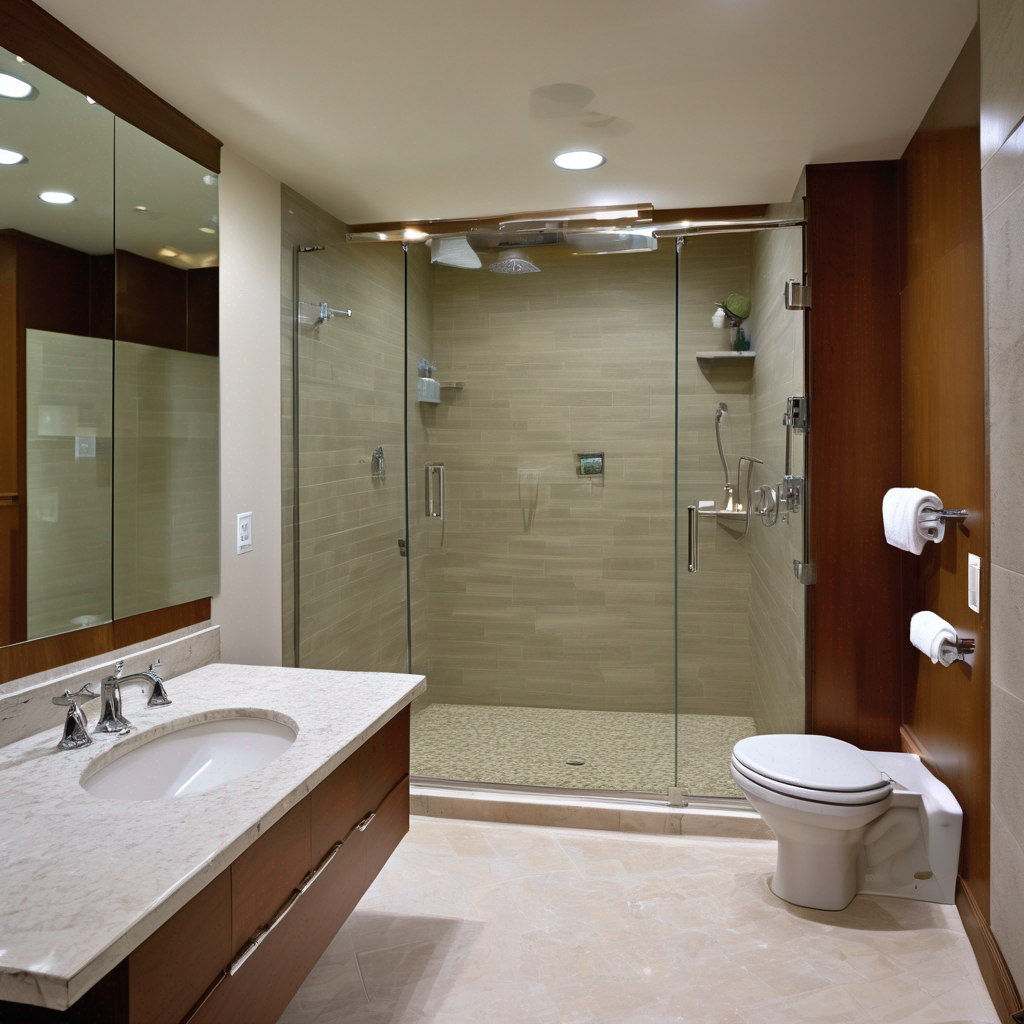
A zero-threshold shower is the epitome of form meeting function in accessible design.
Trend 2: Smart Technology for Independence & Safety
The smart home has officially entered the bathroom, and its impact on accessibility is profound. These tech integrations are not gimmicks; they are powerful tools that enhance autonomy and provide peace of mind. Exploring how technology is shaping accessible bathroom remodels reveals a future of intuitive, responsive environments.
- Smart Toilets & Bidets: Features like automatic-opening lids, heated seats, hands-free flushing, and integrated personal cleansing functions can be life-changing for users with limited mobility or dexterity.
- Voice & Motion Activation: Voice-controlled lighting, fans, and even shower temperature settings reduce the need to interact with physical switches. Motion-activated faucets are both hygienic and easy to use.
- Intelligent Lighting: Layered lighting schemes with dimmers are crucial. Low-level, motion-activated LED lighting along the base of a vanity or toilet provides a safe pathway for nighttime visits without causing harsh glare.
Trend 3: The Grab Bar Gets a Glow-Up
The humble grab bar has undergone a radical transformation. No longer an institutional marker, it's now a sophisticated design element. Manufacturers are producing grab bars that are so stylish, you’d want them in any bathroom.
Look for grab bars that are cleverly integrated into other fixtures, such as toilet paper holders, towel racks, and shower shelves. They now come in a vast array of finishes—matte black, brushed gold, oil-rubbed bronze—allowing them to coordinate perfectly with your faucets and hardware. This is one of the most important stylish and safe bathroom remodeling trends because it normalizes safety, making it an invisible, integrated part of the aesthetic.
Trend 4: Elevated Ergonomics with Floating Vanities & Comfort-Height Fixtures
Thoughtful ergonomics are key to a comfortable and functional accessible bathroom. The "one-size-fits-all" approach is obsolete.
- Floating Vanities: Wall-mounted vanities are a game-changer. They create open floor space underneath, providing essential knee clearance for individuals using wheelchairs or seated walkers. This also makes cleaning the floor significantly easier.
- Comfort-Height Toilets: Toilets that are slightly taller (17-19 inches high, similar to a standard chair) make the process of sitting down and standing up safer and less strenuous on the knees and back.
- Lever Handles: From faucets to doors, lever handles are replacing traditional knobs. They can be operated with a closed fist or an elbow, requiring minimal grip strength.
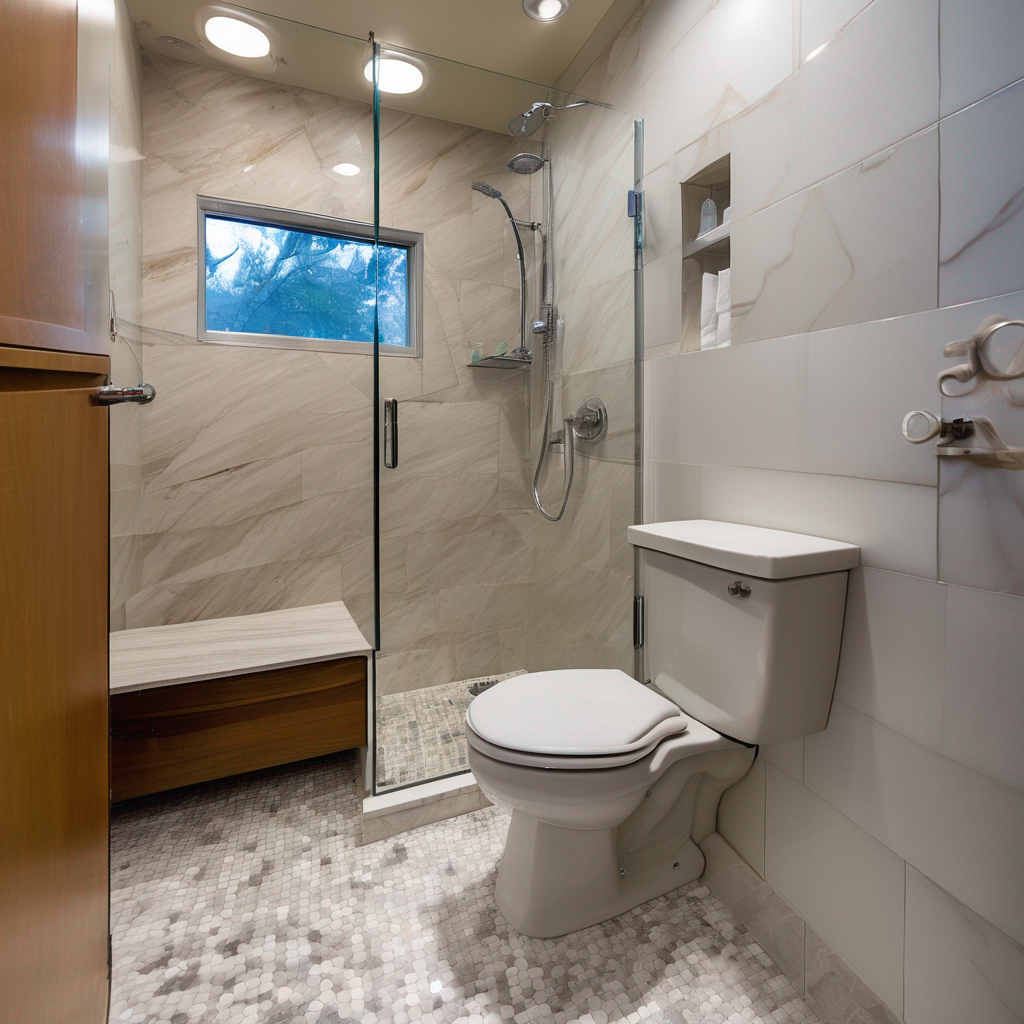
Floating vanities offer a blend of modern aesthetics and crucial accessibility.
Trend 5: A Focus on High-Contrast, Non-Slip Materials
The final layer of a truly modern accessible bathroom lies in the materials. The best materials for an accessible bathroom remodel are those that enhance safety without sacrificing an ounce of style.
- Textured Flooring: Look for porcelain or luxury vinyl tiles with a high coefficient of friction (COF) rating and a subtle texture to provide excellent grip, even when wet. Matte finishes are far superior to polished ones for slip resistance.
- Visual Contrast: For those with low vision, using contrasting colors between the floor, walls, and fixtures is crucial. A darker floor with lighter walls, or a toilet seat that contrasts with the toilet bowl, can dramatically improve depth perception and navigation.
- Groutless Surfaces: Solid-surface materials or large-format tiles for shower walls minimize grout lines, which reduces the growth of mold and makes cleaning far easier for everyone.
Frequently Asked Questions
What's the difference between ADA-compliant and universal design?
ADA (Americans with Disabilities Act) compliance refers to a strict set of legally enforceable standards designed for public and commercial spaces to ensure access for people with disabilities. Universal Design, on the other hand, is a broader design philosophy. Its goal is to create products and environments that are usable by all people, to the greatest extent possible, without the need for adaptation. While an ADA-compliant bathroom is accessible, a universally designed bathroom is accessible, beautiful, and intuitive for everyone—from a child to a grandparent to a wheelchair user.
Can an accessible bathroom remodel still increase my home's value?
Absolutely. When done correctly following modern design trends, an accessible bathroom is a significant value-add. Features like curbless showers, comfort-height toilets, and wider doorways are now seen as luxury upgrades. As the population ages, homes that are equipped for "aging in place" are becoming highly sought-after, expanding your potential buyer pool and making your home more marketable.
What's new in universal design for bathrooms beyond the basics?
The latest innovations focus on integration and ease of use. Side-access tubs with sleek, outward-swinging doors are replacing clunky walk-in tubs. Vanities with integrated, adjustable-height countertops are emerging. We're also seeing more "wet room" concepts where the entire bathroom floor is waterproofed and sloped to a drain, creating a completely open and accessible space.
Are there stylish alternatives to a traditional walk-in tub?
Yes, significantly. The zero-threshold shower is the leading alternative, offering superior aesthetics and easier access. For those who still want a bathing experience, there are low-threshold tubs (with a step of only a few inches) and modern "slide-in" tubs with sleek glass doors that look much more contemporary than the older, medical-style walk-in models. A shower with a comfortable, built-in bench and luxurious handheld showerhead can often provide a more satisfying and safer experience than waiting for a walk-in tub to fill and drain.